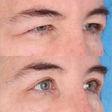
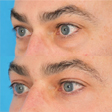
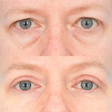
Correct Droopy Eyelids with External Levator Advancement Surgery
Conveniently located to serve the areas of Chicago, IL

External levator advancement is a surgical procedure performed to correct ptosis (droopy eyelid) by repositioning the levator muscle. (1)
A drooping upper eyelid can do more than impact your appearance. It can obscure your visual field, cause persistent eye fatigue, and impact your ability to express how you truly feel. Medically referred to as eyelid ptosis, this condition occurs when the levator muscle, responsible for lifting the eyelid, weakens or stretches, resulting in sagging that may obstruct part of your vision. (2) Whether caused by aging, trauma, or past eye surgery, ptosis is often progressive and will not resolve without medical intervention.
At Chicago Oculofacial Plastic Surgery, Dr. Paul Phelps and his skilled team specialize in a variety of facial rejuvenation and eyelid enhancement procedures, providing advanced surgical solutions for patients struggling with moderate to severe eyelid drooping. An effective procedure for this condition is external levator advancement. This specialized technique is designed to restore proper eyelid height and function.
If you are looking to address droopy eyelids, we encourage you to schedule a personal consultation with Dr. Phelps by contacting Chicago Oculofacial Plastic Surgery online or by calling (312) 888-5754.
Contents
- 1 About External Levator Advancement
- 2 Benefits
- 3 Candidates
- 4 Personal Consultation
- 5 Preparation
- 6 Procedure
- 7 Recovery
- 8 Results
- 9 Cost of External Levator Advancement in Chicago
- 10 FAQ
- 10.1 Is external levator advancement painful?
- 10.2 Will there be visible scars from external levator advancement?
- 10.3 How soon will I see results from external levator advancement?
- 10.4 What are the risks associated with this procedure?
- 10.5 Can external levator advancement be combined with other procedures?
- 10.6 How long will the results of external levator advancement last?
- 11 References
About External Levator Advancement
External levator advancement is a surgical procedure designed to elevate a drooping upper eyelid by tightening the levator aponeurosis, the fibrous tissue that connects the levator muscle to the eyelid. (1) In patients with acquired or congenital ptosis, this connection often becomes overstretched or detached, resulting in a sagging eyelid position. (2) Unlike internal ptosis repair, which is performed from inside the eyelid, external levator advancement uses a discreet incision in the eyelid crease. (3) This approach allows Dr. Phelps to directly visualize, adjust, and reinforce the levator attachment, providing greater control and precision for moderate to severe cases. (4)
This technique is particularly beneficial for patients whose ptosis is not mild enough to be treated internally or whose previous eyelid surgeries failed to restore proper eyelid height. External levator advancement restores both the functional opening of the eye and the cosmetic appearance, making it a highly sought-after treatment for comprehensive eyelid correction.
Benefits
This procedure offers a wide range of aesthetic and functional benefits. By restoring muscle tone and lifting the eyelid to its correct position, patients can expect:
- Improved upper field of vision
- Increased eye comfort during reading and screen use
- A more youthful, rested appearance
- Better eyelid symmetry
- Reduced forehead strain
- Enhanced ability to express emotion through the eyes
- Long-lasting correction with natural-looking results
Candidates
External levator advancement is typically recommended for individuals with moderate to severe ptosis who require a more comprehensive correction than internal approaches can provide. You may be a strong candidate for this procedure if you:
- Have significant drooping of one or both upper eyelids
- Notice reduced visual fields or difficulty keeping your eyes fully open
- Experience eye fatigue, or use your forehead to lift your eyelids
- Are in good general health
- Are not currently suffering from nerve or muscle conditions that affect eyelid function
- Have realistic expectations about the surgery and are committed to recovery guidelines
The best way to determine candidacy for external levator advancement is through a comprehensive personal consultation with Dr. Phelps, who will assess your anatomy, eyelid movement, and health history to decide if external levator advancement is the best choice based on your unique case.
Personal Consultation
During a personal consultation, Dr. Phelps will perform a detailed assessment of your eyelids, including the levator muscle function and the amount of excess skin or fat around your eyes, to document the degree of eyelid drooping.
You will have the opportunity to ask questions and share your aesthetic goals or concerns. Dr. Phelps will then explain the surgical plan, review your options, and tailor the procedure to meet your unique concerns.
To get started, schedule a personal consultation with Dr. Phelps online or by calling Chicago Oculofacial Plastic Surgery at (312) 888-5754.
Preparation
Preparing for external levator advancement involves a few important steps. Dr. Phelps and his staff will provide clear guidance based on your individual treatment plan.
- Stop taking certain blood-thinning medications or supplements if instructed.
- Avoid using nicotine and drinking alcohol in the weeks before surgery.
- Arrange for someone to drive you home after your procedure, since you’ll receive anesthesia or sedation.
- Prepare a recovery space at home with:
- Cold compresses
- Pain relief
- Clean gauze
- Follow all pre-surgical guidelines Dr. Phelps provides to reduce complications and improve your results.
Procedure
Dr. Phelps will perform your external levator advancement at an accredited surgical facility using local anesthesia with sedation or general anesthesia, depending on your circumstances and preferences. Dr. Phelps will create a small incision in the natural crease of the upper eyelid to access the levator aponeurosis directly.
He will then carefully move the levator tissue and lift the eyelid to the desired height, ensuring both symmetry and function. After securing the levator in its new position, Dr. Phelps will close the incision with fine sutures designed to minimize scarring. On average, external levator advancement tends to take one to two hours, although procedure times are subject to variation. (1)
Recovery
Dr. Phelps will guide you throughout your recovery process and give you a list of all necessary recovery instructions. You can expect some swelling, bruising, and mild soreness for the first week, which will improve gradually. Dr. Phelps may prescribe antibiotic ointment or lubricating eye drops to support healing and reduce dryness or irritation.
Dr. Phelps may recommend keeping your head elevated while sleeping and avoiding strenuous activities for at least 10 to 14 days. It is recommended that you schedule follow-up visits so Dr. Phelps can monitor your healing progress. Most patients feel comfortable returning to work and non-strenuous activities within 7 to 10 days, although complete healing and final results can take several weeks to fully develop.
Results

The results of external levator advancement are typically long-lasting, especially when performed by an experienced oculofacial plastic surgeon like Dr. Phelps. While natural aging will continue to affect the skin and underlying tissues, the muscle correction remains stable for many years. Once any swelling subsides and your tissues settle, you will notice a more open and lifted eyelid contour. Your eyes will appear more balanced, awake, and expressive.
Cost of External Levator Advancement in Chicago
Every case of ptosis is different, and every treatment at Chicago Oculofacial Plastic Surgery is tailored uniquely to each patient based on several factors. As such, the cost of each external levator advancement treatment will vary from patient to patient. After you establish a treatment plan during your consultation, Dr. Phelps’ staff will give you a detailed price estimate. If you are looking to get a sense of what your treatment might cost before your consultation, we encourage you to explore our pricing page.
Schedule your consultation today to explore the cost of your external levator advancement. If you have any further questions, please call our Chicago office at (312) 888-5754.
FAQ
Is external levator advancement painful?
Most patients experience only mild discomfort during recovery. Anesthesia is used during the procedure, and any post-operative soreness is typically managed with pain medication.
Will there be visible scars from external levator advancement?
The incision is placed within the natural eyelid crease, so any scarring is minimal and well-concealed once healed.
How soon will I see results from external levator advancement?
Initial improvements are visible within a week, but swelling can take several weeks to resolve. Final results typically become fully apparent by one to two months post-surgery.
What are the risks associated with this procedure?
Risks include asymmetry, infection, undercorrection, or overcorrection. These are rare when surgery is performed by a highly trained specialist like Dr. Phelps.
Can external levator advancement be combined with other procedures?
Yes. It is often performed in conjunction with blepharoplasty or brow lifts for a more complete eye rejuvenation. Dr. Phelps will discuss combination options during your consultation.
How long will the results of external levator advancement last?
Results are often long-lasting, with many patients enjoying their improved eyelid position for 10 years or longer. Routine aging may cause future changes, but rarely requires repeat surgery.
References
- Wong CH, Hsieh MKH, Mendelson B. Upper Eyelid Ptosis Correction with Levator Advancement Using the Levator Musculoaponeurotic Junction Formula in White Patients. Plastic & Reconstructive Surgery. 2023;153(6):1403-1414. doi:https://doi.org/10.1097/prs.0000000000010889
- Shahzad B, Siccardi MA. Ptosis. PubMed. Published 2020. https://www.ncbi.nlm.nih.gov/books/NBK546705/
- Bilici S, Harbigil-Sever T, Ugurbas SH. Digital analysis of unilateral ptosis repair: external levator advancement vs. Müller’s muscle conjunctival resection. Arquivos Brasileiros de Oftalmologia. 2024;87(2). doi:https://doi.org/10.5935/0004-2749.2023-0028
- Avdagic E, Phelps PO. Eyelid ptosis (Blepharoptosis) for the primary care practitioner. Disease-a-Month. 2020;66(10):101040. doi:https://doi.org/10.1016/j.disamonth.2020.101040